

Access to drinking water: a challenge for Syrian refugees in Lebanon

200 ORISA® humanitarian water filters distributed by Action Against Hunger
As part of this intervention, Action Against Hunger selected two water treatment systems: a centralised solution at camp level and ORISA®, used as a household filtration system at family level.
A total of 200 ORISA® water filters were distributed in 2025. As ORISA® operates without electricity, it enables beneficiaries to filter their water directly where they live. This self-sufficiency is particularly well-suited to informal settlements and areas where access to infrastructure and energy may be limited. However, simply deploying water filtration equipment is not enough: the local communities’ ownership of the system is crucial to ensuring its long-term use. Action Against Hunger teams therefore supported the distributions by providing individual training on the use and maintenance of ORISA®. Local representatives were also trained to support beneficiaries alongside the field teams.
A survey of 99 households to assess the impact of ORISA® filters

95 % of households use ORISA® every day
One of the key findings from the monitoring carried out by Action Against Hunger concerns the beneficiaries’ adoption of the filter.
95 % of the households surveyed reported using ORISA® every day.
And filtration is not merely used as a supplementary measure: 95 % of respondents also stated that ORISA® is their main source of drinking water.
Only a few households continue to rely on bottled water or water delivered by lorry. These results demonstrate how the filtration system has become an integral part of families’ daily lives.

98 % of beneficiaries have noticed an improvement in their water supply
The monitoring carried out by ACF also highlights a significant improvement in the perceived quality of the water.
98 % of households report an improvement in the taste, smell or clarity of their water following filtration.
Furthermore, 98 % say they feel safer drinking water filtered by ORISA® than water from the sources they used previously.
Action Against Hunger therefore concludes in its analysis that the ORISA® filtration system has been very well received by beneficiaries and has become firmly established in their daily lives.
A reported decline in waterborne diseases
Water-related expenditure reduced for 55 per cent of households
Training beneficiaries to ensure sustainable water filtration
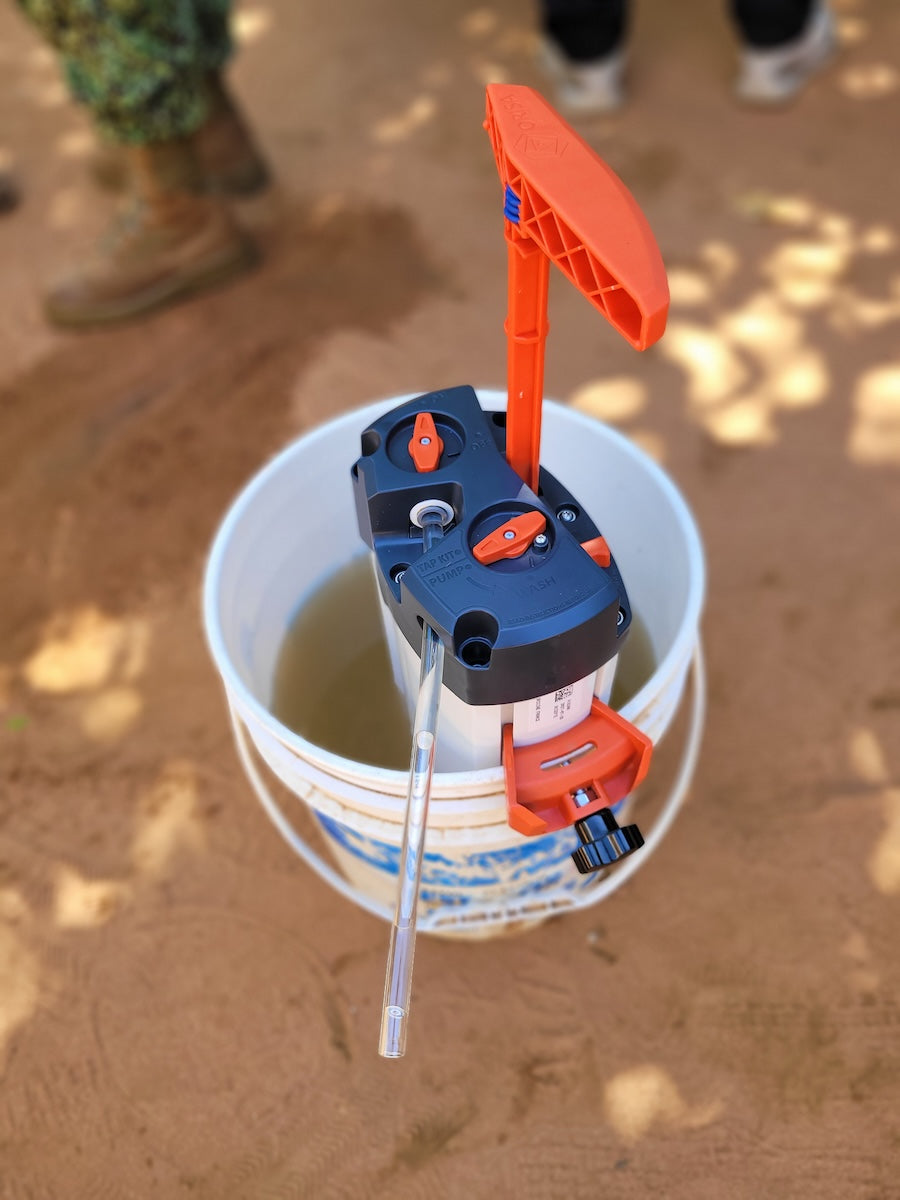
The ORISA® humanitarian water filter: a self-contained solution that brings clean water directly to families
In humanitarian contexts, constraints on access to water vary greatly depending on the area: refugee camps, remote rural areas, natural disasters, conflicts, epidemics or population displacement.
Household water filtration enables action to be taken directly at household level, giving beneficiaries the means to treat their own water. The intervention carried out by Action Against Hunger in Lebanon now makes it possible to measure the level of adoption in concrete terms several months after distribution:
95 % use ORISA® daily, 95 % use it as their main source of drinking water, 98 per cent have noticed an improvement in their water quality, and 55 % report having reduced their water-related expenditure.
Beyond simply providing the equipment, the monitoring results thus demonstrate the importance of combining equipment suited to local conditions, training for beneficiaries and local support to ensure sustainable access to safe water.

Expertise born of humanitarian experience
ORISA® was conceived on the basis of the field experience of David Monnier, a former humanitarian worker and one of the company’s original co-founders, and developed in response to a set of specifications drawn up in collaboration with major French and international NGOs: Médecins sans Frontières, Croix Rouge Française, Solidarités International, Médecins du Monde, Handicap International, Terres des Hommes Lausanne, Premières Urgences.


