Heatwave: how to get drinking water – cuts, restrictions, shortages

Introduction

  • Why heatwaves increase the risk of water cuts
  • `Could France run out of drinking water
  • What should you do in the event of a water cut?How many litres should you stock up on?
  • How should you store your water?
  • Why is a water purifier essential?

`Imagine this. You turn on the tap. Not a single drop. The supermarkets are already being stormed. Bottles of water disappear within a few hours. This situation has already happened in France.

Why do heatwaves increase the risk of drinking water supply cuts?

Every summer, heatwaves are accompanied by an increase in water restrictions in many French departments. Whilst these measures mainly affect non-essential uses (watering gardens, washing cars, filling swimming pools, etc.), they reflect a deeper reality: water resources are coming under increasing strain. In certain exceptional circumstances, this pressure can even disrupt the drinking water supply to some local authorities. In 2022, more than a hundred French municipalities experienced difficulties with their drinking water supply, requiring water to be distributed in bottles or by tanker. Why are these situations becoming more frequent? What are the mechanisms that lead to restrictions, or even water cuts? Here is what you need to know.

More frequent and intense heatwaves

Heatwaves are no longer exceptional events. For several years now, they have been occurring earlier, more frequently and often lasting longer. Temperatures regularly exceed 35 °C, with peaks reaching or exceeding 40 °C in some regions. This rise in temperatures has several direct consequences for water resources: increased evaporation from rivers, reservoirs and the ground; a gradual fall in groundwater levels as dry spells persist; and an increase in drinking water consumption, particularly for hydration, cooling off or watering green spaces. In other words, demand for water is rising at precisely the moment when available supplies are dwindling. This imbalance explains why the authorities are implementing water restriction measures at the first signs of drought in order to safeguard priority uses, including the drinking water supply.

canalisations en cuivre qui contaminent l'eau

Why water networks are under pressure

Contrary to popular belief, the risk does not stem solely from a lack of water in rivers or groundwater. Drinking water production and distribution infrastructure must also cope with peaks in consumption, which can sometimes be very significant. During a heatwave, demand can rise significantly in certain localities, particularly in tourist or coastal areas. At the same time, the resources used to produce drinking water may diminish or deteriorate in quality, requiring additional treatment. When several factors coincide – prolonged drought, high consumption, falling water levels and technical constraints – some local authorities may find it difficult to ensure a continuous supply. Such situations remain exceptional, but they demonstrate that access to drinking water depends on a delicate balance between the availability of the resource, the capacity of the infrastructure and the needs of the population.

Water restrictions, shortages and cuts: what’s the difference?

These three concepts are often confused, even though they refer to quite distinct situations.

Water restrictions

Water restrictions are temporary measures imposed by prefects when water supplies become insufficient. They mainly apply to non-priority uses: watering gardens, filling swimming pools, washing vehicles or watering at certain times.

The aim is to conserve reserves in order to guarantee the supply of drinking water to the population.

Water shortages

A shortage is a situation in which the available resources are no longer sufficient to meet needs in the long term. It may result from a prolonged drought, a significant drop in groundwater levels or exceptionally high consumption.

Not all shortages lead to a cut in the drinking water supply, but they do increase the risk of strain on the water networks.

Drinking water cuts

A water supply disruption occurs when the water supply is cut off or when the water being supplied is no longer fit for consumption. There can be many causes: a technical fault, accidental pollution, a natural disaster, an exceptional drought or supply difficulties.

In such situations, the authorities generally put temporary measures in place, such as distributing bottled water or installing water tanks.

Drinking water cuts remain rare in France. But are they really that unusual? Recent years have seen a trend that warrants closer examination.

Could there really be a shortage of drinking water in France?

For many French people, turning on a tap and immediately getting drinking water is such an everyday act that it seems unchangeable. However, the droughts of recent years have served as a reminder that this access, whilst extremely reliable, can be jeopardised in certain circumstances. It is important to distinguish between two situations. The first is that of water restrictions, which mainly apply to certain uses in order to conserve the resource. These have become increasingly frequent during periods of drought. The second, much rarer but very real, concerns temporary interruptions to the drinking water supply. These can force some local authorities to distribute bottled water or supply residents via water tankers. Such situations remain exceptional on a national scale, but their increasing frequency in recent years raises questions about our ability to cope with extreme weather events.

The power cuts already observed in recent years

Contrary to popular belief, difficulties in supplying drinking water do not only affect countries facing chronic water stress. In France, too, several recent incidents have shown that some local authorities can face significant difficulties. The summer of 2022 remains the most striking example. Following several months of exceptional drought, more than a hundred local authorities had to be supplied with drinking water by water tankers or through the distribution of bottles, due to a lack of sufficient resources or infrastructure capable of meeting demand. Since then, other weather events have also led to local disruptions to the drinking water supply, whether due to floods, storms, landslides or heatwaves. These situations serve as a reminder that access to drinking water depends not only on the availability of the resource, but also on the proper functioning of water abstraction, treatment and distribution facilities. In other words, a local authority may have water sources nearby yet still face difficulties in producing or distributing water that meets health standards.

Why are some local authorities without drinking water?

There are many reasons that can lead to an interruption in the drinking water supply. Drought is one of the most widely reported causes. When groundwater levels or river levels reach exceptionally low levels, some local authorities no longer have sufficient resources to supply their networks. But this is not the only factor. Accidental pollution of a water intake, a breakdown at a treatment plant, a major pipe burst or even a natural disaster can also temporarily disrupt the supply of drinking water. Some local authorities also have to contend with ageing infrastructure, sometimes designed for needs far below those of today. When high summer consumption is combined with limited resources, the balance can become particularly fragile. Finally, tourist and coastal towns often experience a very significant increase in their population during the summer. This rise in consumption occurs precisely at a time when natural resources are under the greatest strain.

Purifier de l’eau de pluie avec un purificateur ORISA

Which areas are most at risk?

Not all regions of France are equally vulnerable. Mediterranean areas are naturally more exposed to droughts due to lower rainfall and particularly hot summers. South-western France also regularly experiences water shortages during long periods without rain. Rural municipalities supplied by small catchments or local springs may be more vulnerable to prolonged droughts than large urban areas with multiple water sources. Tourist areas also require particular attention. The arrival of thousands of visitors during the summer months can lead to a rapid increase in water consumption, even as available resources dwindle. Finally, local authorities heavily reliant on a single water source are generally more vulnerable than areas benefiting from multiple catchments or interconnections with neighbouring networks. This does not mean that these areas will inevitably experience water cuts. However, they are more likely to face restrictions or supply pressures during exceptional weather events.

What should you do if the tap water supply is cut off or unfit for drinking?

A water cut or a temporary ban on drinking tap water is always unsettling. However, the first few hours are often crucial for avoiding mistakes and managing the situation calmly. The good news is that there are some simple steps you can take to minimise the impact of a disruption to the drinking water supply. First and foremost, it is important to understand the cause of the problem and to follow the recommendations of the relevant authorities.

Stock d’eau potable recommandé pour 72 heures

Initial checks

If you find that there is no water coming from the tap or receive a warning stating that the water is unfit for consumption, start by identifying the nature of the problem. A water cut may be due to engineering works, a technical fault or a localised disruption affecting only your home. Check whether your neighbours are experiencing the same issue and consult the information issued by your local council, your water supplier or your local prefecture. If the water is declared unfit for drinking, it is essential to follow the instructions provided. Water may still be suitable for certain domestic uses, such as flushing toilets or cleaning, whilst it is not recommended for drinking or food preparation. You should also avoid drinking water of uncertain quality, even if it appears perfectly clear. Many microbiological or chemical contaminants are invisible to the naked eye and do not alter the taste or smell of the water. If you have a supply of drinking water or a suitable self-contained purification system, you should prioritise using this until the situation is resolved.

Guidance from the authorities

When water is declared unfit for consumption, the health authorities generally specify which uses are permitted and which should be avoided. Depending on the situation, you may be advised not to use tap water for: drinking; preparing meals; washing fruit and vegetables that are eaten raw; preparing baby bottles; or brushing your teeth. In some cases, particularly in the event of microbiological contamination, the authorities may recommend boiling the water for several minutes before consumption. This method helps to eliminate certain micro-organisms, but it is not effective against all contaminants. Above all, it is very inconvenient and generates heat, so it should be avoided during heatwaves or when there are power cuts. In the event of a complete water cut, local authorities may organise the distribution of bottled water or set up temporary water collection points. In a disaster situation, water is rationed per household, which is often insufficient.

How long can a power cut last?

There is no standard timeframe. A technical fault on the network may be resolved within a few hours, whilst contamination of a water intake, an exceptional drought or a natural disaster may take several days to resolve before normal service is restored. In some cases, residents are supplied with drinking water on a daily basis by water tankers or through the distribution of bottles until the network is restored. It is precisely this uncertainty that explains why the French authorities recommend that every household should have a water reserve and a minimum level of self-sufficiency to cope with the first 72 hours of a crisis. Being prepared does not mean expecting the worst. It simply means being able to meet one’s basic needs for as long as it takes for services to be restored.

Checklist: what to do in the event of a water cut or a ban on drinking water

{"type":"root","children":[{"type":"paragraph","children":[{"type":"text","value":"Act immediately: "}]},{"listType":"unordered","type":"list","children":[{"type":"list-item","children":[{"type":"text","value":"Check whether the cut affects only your home or the whole neighbourhood."}]},{"type":"list-item","children":[{"type":"text","value":"Check for updates from your local council or water supplier."}]},{"type":"list-item","children":[{"type":"text","value":"Save any remaining drinking water for essential uses."}]},{"type":"list-item","children":[{"type":"text","value":"Use only water that has been declared safe to drink or has been properly purified for drinking and cooking. "}]},{"type":"list-item","children":[{"type":"text","value":"Allow for at least 6 litres of water per person per day if the situation continues. "}]},{"type":"list-item","children":[{"type":"text","value":"Charge your mobile phones and keep up to date with developments. "}]},{"type":"list-item","children":[{"type":"text","value":"Prepare an alternative solution in case the cut lasts for several days."}]}]}]}

How many litres of water should you allow for?

When there is a water cut, we often realise that we underestimate our daily needs. Drinking is only part of our water consumption. Water is also essential for preparing meals, maintaining basic hygiene, making a baby’s bottle or even watering pets. The French authorities recommend having a supply to last at least 72 hours – that is, three days – in order to cope with the initial hours of a crisis before things return to normal. As a guide, it is generally advised to have around 6 litres of water per person per day. This amount covers essential needs for drinking, food preparation and basic hygiene. During a heatwave, these needs increase significantly, particularly for the most vulnerable and families with children.

Composition du foyer Réserve recommandée (72 h)
1 personne 18 litres
2 personnes 36 litres
Famille de 4 personnes 72 litres
Personne âgée ou dépendante Prévoir une réserve supplémentaire selon les besoins médicaux
Bébé Prévoir de l'eau supplémentaire pour les biberons et l'hygiène
Animaux domestiques Ajouter une réserve adaptée à leur taille

Official recommendations

Recent extreme weather events have prompted the authorities to step up their messages regarding individual preparedness. The government guide ‘Resilient in the Face of Risks’ recommends that every household should be able to meet its basic needs during the first 72 hours of an exceptional event. Water is, of course, one of the top priorities. In addition to the volume stored, it is also recommended to have a solution in place for producing drinking water should the situation become prolonged. This approach is already widely adopted in other countries facing natural disasters or extreme weather events, where households are encouraged to have both a water reserve and a suitable treatment solution. The aim is not to live in permanent self-sufficiency, but to be able to cope calmly with an unforeseen event without having to rely immediately on emergency water supplies.

How should you store water properly?

Building up a water reserve is useful… provided it is stored under the right conditions. A few simple rules will help you keep your drinking water safe for several months.

Use suitable containers:

Opt for food-grade containers or jerrycans specifically designed for storing drinking water. These minimise the risk of unwanted substances leaching into the water and make storage easier.

Keep the water away from heat

Store your supply in a cool, dry place away from direct light. A stable temperature slows down the growth of microorganisms and preserves the water’s quality.

Plan for a complementary solution

Storage has one limitation: once the supply is used up, you need to be able to access a new source.

This is why many households now choose to supplement their stock with a water purification system. This approach allows you to produce drinking water from various locally available sources (rainwater, spring water or river water, depending on conditions and with appropriate treatment), whilst reducing the amount of water that needs to be stored.

Pourquoi un purificateur d’eau devient un équipement de résilience

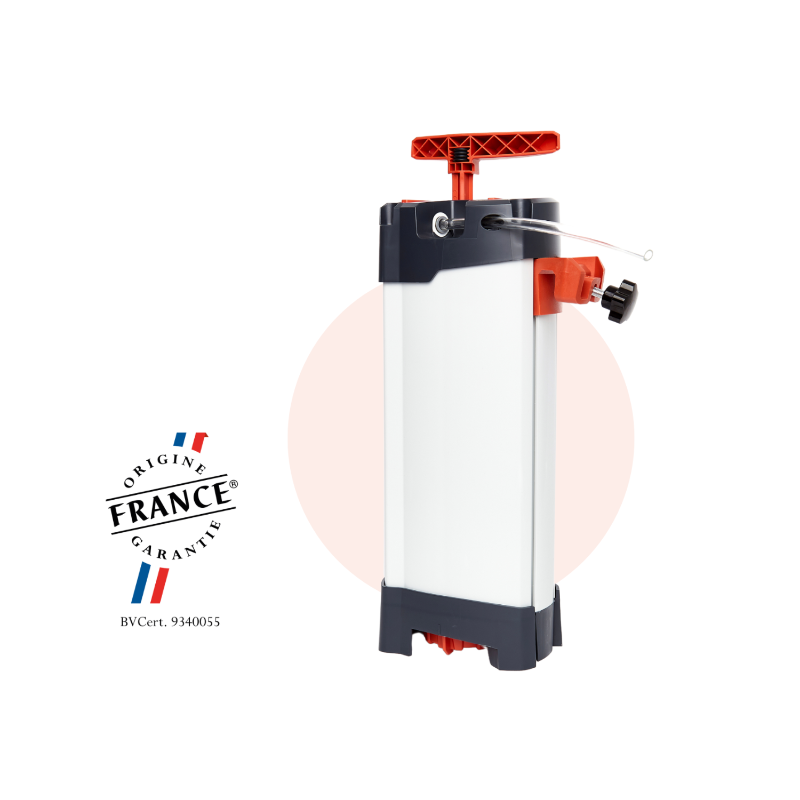
We all own equipment that we hope we’ll never have to use: a fire extinguisher, a first-aid kit or even a spare tyre. Yet nobody questions their usefulness. They’re there to deal with the unexpected. The same applies to access to drinking water. Whilst water cuts remain rare in France, periods of drought, natural disasters or certain technical incidents show that they can occur from time to time. In such situations, having a backup solution enables us to continue producing drinking water whilst we wait for things to return to normal. A water purifier does not replace the public water supply. It complements it, just as a fire extinguisher complements the emergency services. It forms part of a resilience strategy: being able to meet an essential need when circumstances demand it. It is with this in mind that ORISA was designed. Thanks to its ultrafiltration technology, it can produce drinking water from rainwater, spring water or fresh surface water.

Ultimately, a water purifier is a piece of equipment that one hopes never to have to use… but which one is glad to have when the unexpected happens.

Conclusion

Heatwaves and droughts serve as a reminder that access to drinking water is not always guaranteed. The aim is not to give in to worry, but to plan ahead with solutions tailored to your lifestyle.

Discover ORISA® products to become more self-sufficient whilst reducing your use of plastic bottles.