Official emergency preparedness and 72-hour emergency kit visuals from seven European countries: France, Sweden, Czech Republic, Netherlands, Belgium, Germany and Luxembourg.
EMERGENCY

Emergency kits recommended by the French government and other European authorities

Across Europe, authorities are encouraging citizens to prepare to cope with an emergency situation for at least 72 hours. Power outages, natural disasters, supply disruptions… Among the essential needs to plan for, access to drinking water is central.

But how can you continue to have access to drinking water when the network is no longer working or the supply becomes uncertain?

Beyond the essential reserves, which run out very quickly, there are self-contained purification solutions capable of treating microbiological contamination in fresh water without electricity.

Why do governments recommend a 72-hour emergency kit?

Since March 2025, the European Union has been encouraging Member States to improve preparedness among their populations for crisis situations. The goal: to enable citizens to meet their essential needs for at least 72 hours.

In France, the government also recommends putting together an easily accessible emergency kit, including drinking water, food, a radio, a flashlight, medication, and important documents.

These recommendations are part of a preventive approach to events that could temporarily disrupt our daily lives:

  • Storms, floods, and other natural disasters.
  • Prolonged power or water outages.
  • Technical incidents affecting supply networks.
  • Situations requiring evacuation or sheltering in place.

The goal is not to live in fear, but to have the necessary means to deal with the unexpected.

And when it comes to vital needs, water deserves special attention.

In an emergency, how can you continue to have access to drinking water?

We are used to turning on a tap to have immediate access to controlled water supplied by a network.

  • A prolonged water outage

    Following a technical failure, a pipe burst, or damage to infrastructure, the supply may be interrupted for a variable period.

  • Microbiological contamination.

    Certain events may affect the sanitary quality of the water and require precautionary measures or restrictions on use.

  • A natural disaster

    After a flood or storm, infrastructure can be damaged and some supply points may become inaccessible.

In France, the authorities recommend keeping a reserve of at least 6 litres of drinking water per person in your 72-hour emergency kit.

This precaution remains essential. But depending on the number of people in the family, it is not always applicable and can even complicate the situation. In the event of evacuation, especially with children, transporting this water supply becomes very difficult ... even impossible. And to plan for longer self-sufficiency, it is also useful to know the solutions for purifying locally available fresh water.

Purifying water without electricity: what solutions are available?

  • Boil water

    Boiling, when properly carried out, inactivates many pathogenic microorganisms. However, it requires a heat source and fuel. Furthermore, this solution is difficult to apply in the event of an evacuation.

  • Use disinfectant tablets

    Depending on their composition and conditions of use, some tablets can microbiologically disinfect water.

    Their effectiveness varies depending on the microorganisms targeted, the initial quality of the water, and the required contact time.

  • Water-filter bottles

    Filter bottles filter out bacteria most effectively, but their filtration performance does not extend to viruses. With an average capacity of 1,000 litres of filtered water, this solution is not reliable enough to meet all the needs of a family: drinking, preparing meals, making baby bottles, washing hands, brushing teeth, etc.

  • icone purificateur d'eau ORISA

    Choose a portable water purifier, not just a basic filter

    An important distinction must be made: most filters are not capable of trapping viruses. Performance depends notably on the technology used and test results. A purifier offers a broader range of filtration.

ORISA®: a standalone water purifier for emergency preparedness

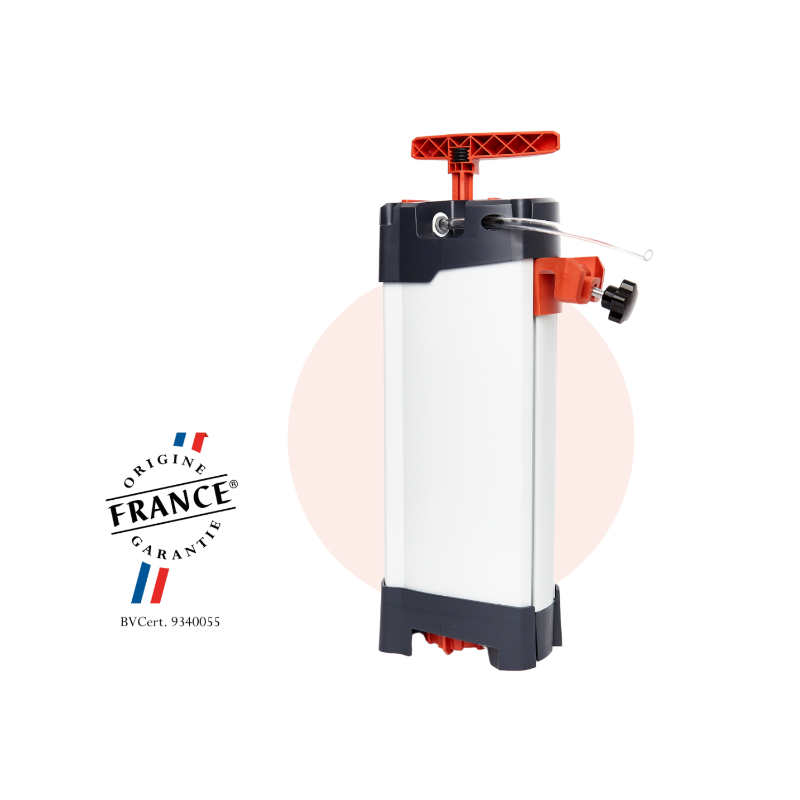
Designed and manufactured in France, ORISA® is a portable water purifier that works without electricity and without the addition of chemical treatment products.

Thanks to its 0.01 micron ultrafiltration membrane, it makes it possible to treat microbiological contamination in suitable fresh water: river, lake, rain or well water.

It is simple to use: the water is drawn in and then filtered by manual pumping, without requiring connection to a network.

The benefits of ORISA® for home emergency preparedness

  • icone électricité éclair

    Purification without electricity

    Manual operation eliminates the need for an electrical power supply to filter the water.

  • pictogramme membrane uf

    Documented microbiological protection

    ORISA® filtration performance has been tested, notably as part of the World Health Organization programme dedicated to household water treatment technologies.

  • A flow rate of up to 3 liters per minute

    A capacity suitable for preparing drinking water for several people, depending on the conditions of use.

  • pictogramme réparation

    Durable, repairable equipment

    Its replaceable membrane can filter up to 20,000 liters of water when following the recommended maintenance procedures.

Les équipes du Secours Islamique France forment des burkinabés à l'utilisation du purificateur d'eau ORISA

A technology proven in the humanitarian field

ORISA® is also used by NGOs to meet drinking water access needs in various countries.

These deployments illustrate the value of a portable, self-contained device capable of treating microbiological water contamination in environments where infrastructure is inadequate or disrupted.

This is the same technology that Fonto de vivo makes available to individuals who want to better anticipate their water needs.

Shop ORISA®
Vue rapprochée de l'intérieur d'une canalisation d'eau fortement corrodée, présentant d'importants dépôts de rouille et de sédiments susceptibles de perturber le réseau d'eau.

In what situations can ORISA® be useful?

WATER SUPPLY INTERRUPTION

In the event of a prolonged water supply interruption

If the usual supply is interrupted, ORISA® can purify a source of fresh water, providing a backup to existing reserves.

NETWORK CONTAMINATION

When the available water poses a microbiological risk

Damaged pipes, network failures, or flooding can promote the microbiological contamination of water by bacteria, viruses, or parasites.

Thanks to its 0.01-micron ultrafiltration membrane, ORISA® can retain these microorganisms and purify suitable fresh water without electricity.

Technicien manipulant deux filtres à eau au-dessus d'un seau, avec une membrane de filtration, des tuyaux et des outils disposés sur une table.
DURABLE AND RELIABLE WATER FILTRATION

A reusable solution for greater water independence

Unlike a treatment solution that uses consumables, ORISA® can be maintained and reused over time, provided that proper maintenance and storage procedures are followed.

It is also equipment that can be used outside of emergency situations, particularly while traveling or in an off-grid home.

How to choose a water purifier for your emergency kit?

Before purchasing equipment, four criteria should be considered.

  • 1. Purification performance

    Check if the device retains bacteria, parasites, and viruses, with official test results.

  • 2. Energy independence

    In the event of a power outage, manual operation provides a strategic advantage.

  • 3. Treatment capacity

    For a household, flow rate and ease of use are key.

  • 4. Durability and Maintenance

    Equipment intended for emergency preparedness should be suitable for storage, maintenance and return to service.

Planning ahead to ensure access to drinking water also means becoming more self-sufficient

Preparing for emergencies is not about imagining the worst. It is primarily about identifying your essential needs and choosing the right equipment.

Assembling a 72-hour emergency kit is a first step recommended by the authorities. For those who wish to go further, having an autonomous purification solution can be a relevant addition, particularly when a suitable source of fresh water is accessible.

With ORISA®, Fonto de Vivo offers a sustainable solution, made in France and based on proven microbiological purification technology.